How Early Orthodontic Screenings Benefit Growing Smile Transformations
When most parents think about orthodontics, they picture a teenager in braces. The idea of bringing a seven-year-old to an orthodontist doesn't cross their minds. Their child still has baby teeth. Why would they need an evaluation this early?
The answer is simple: what's happening beneath the surface matters more than what you can see. By age seven, enough permanent teeth have erupted and enough jaw growth has occurred for an orthodontic specialist to spot patterns that will shape your child's smile, bite, breathing, and facial development for the rest of their life.
At Schoolhouse Orthodontics Ltd (SHO) in Nazareth, Dr. Bolden provides early screenings that give families clarity and confidence. Sometimes that screening leads to early treatment. Often, it simply means monitoring growth and knowing the right time to act. Either way, the information is invaluable.
Why Age Seven Is the Recommended Starting Point
The American Association of Orthodontists recommends every child receive their first orthodontic evaluation by age seven. This isn't arbitrary. At this age, a child typically has a mix of baby teeth and permanent teeth that reveals how the jaw is developing, whether there's adequate space for incoming teeth, and how the bite is forming.
Dr. Bolden can identify early warning signs during this evaluation that are invisible to parents and even general dentists. A narrow palate restricting airflow. A crossbite putting asymmetric pressure on a growing jaw. Front teeth at risk for trauma because of how far they protrude. These concerns don't wait politely until adolescence to cause problems. They compound over time.
Early detection doesn't always mean early treatment. In many cases, Dr. Bolden recommends a monitoring plan where she tracks your child's growth at regular intervals. When the right time to intervene arrives, she's already familiar with your child's development and can act precisely.
What an Early Screening Actually Looks Like
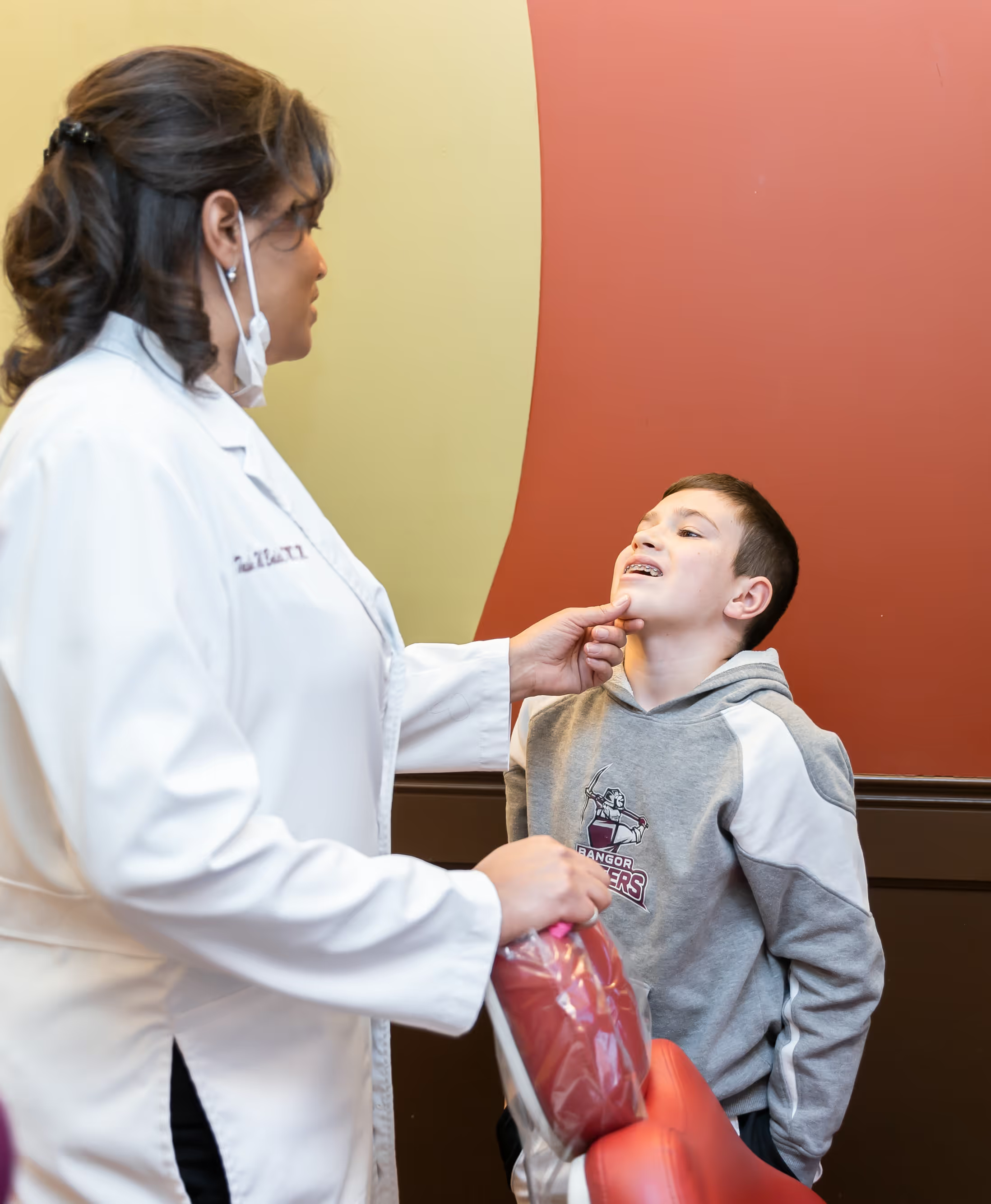
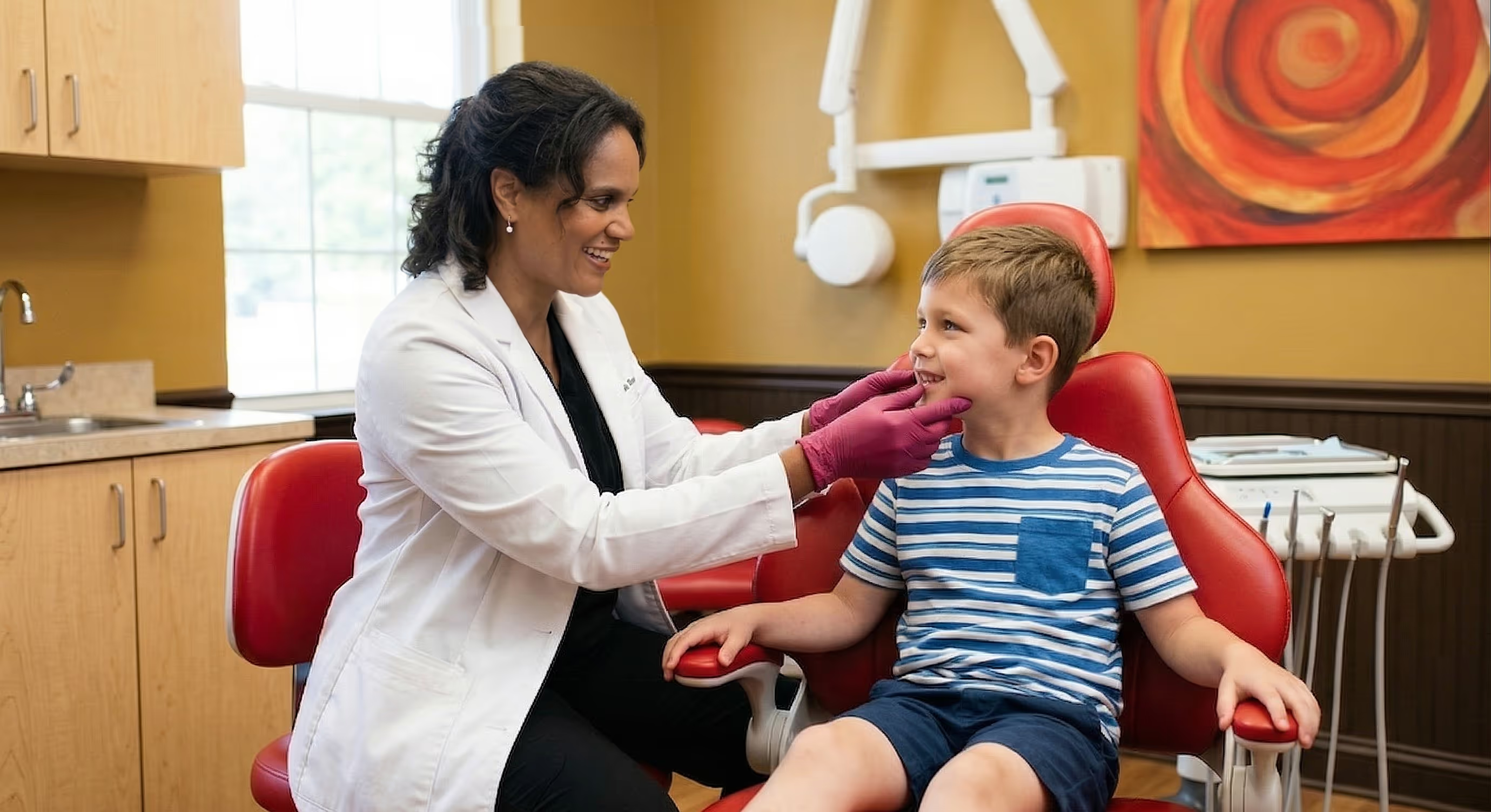
An early orthodontic evaluation at SHO is comfortable, quick, and completely non-invasive. Dr. Bolden examines your child's teeth, bite, and jaw using a combination of visual assessment and digital imaging. There are no messy impressions. No discomfort. The appointment feels more like a checkup than a procedure.
During this evaluation, Dr. Bolden assesses several key areas. She looks at how the upper and lower teeth fit together when your child bites down. She evaluates whether the palate is developing with enough width to support both proper tooth alignment and healthy breathing. She checks whether permanent teeth have adequate space to erupt without crowding. And she observes jaw symmetry to catch any imbalances in how the left and right sides are growing.
Parents receive a clear explanation of what she finds. If everything looks healthy, Dr. Bolden lets you know and schedules periodic growth checks. If she identifies concerns, she explains exactly what they are, why they matter, and when treatment would be most effective.
Problems Early Screenings Can Catch
The issues Dr. Bolden detects during early evaluations often surprise parents. These aren't problems that cause immediate pain or obvious visual concern. They're developing patterns that, left alone, become increasingly difficult and costly to correct.
Crossbites that affect jaw growth. When upper teeth sit inside lower teeth on one or both sides, the jaw grows asymmetrically. Early correction guides the jaw into balanced development. Waiting until adolescence means correcting both the bite and the structural imbalance it created.
Narrow palates that restrict breathing. A palate that's too narrow doesn't just crowd teeth. It limits the size of the nasal airway, contributing to mouth breathing, snoring, poor sleep quality, and daytime fatigue. Dr. Bolden's airway-focused approach identifies these connections early. Palate expansion during childhood is far simpler than addressing the same issue in a fully developed adult.
Severe crowding before all permanent teeth arrive. When baby teeth are already tight with no spacing between them, the larger permanent teeth coming in will have nowhere to go. Early space management can prevent impaction, reduce the need for extractions later, and simplify future treatment significantly.
Protruding front teeth vulnerable to injury. Children with front teeth that stick out face a higher risk of dental trauma during sports and play. Repositioning these teeth early protects them from fractures that require extensive repair.
Habits influencing facial development. Prolonged thumb sucking, tongue thrusting, or chronic mouth breathing change how the jaw and palate grow. Dr. Bolden identifies these habits and helps redirect development before the patterns become permanent.
The Difference Between Early Treatment and Waiting
Not every child who gets screened at age seven needs treatment right away. Dr. Bolden is deliberate about recommending intervention only when it provides measurable benefit. But when early treatment is indicated, the advantages are significant.
A child's jaw is still growing and responds to orthodontic guidance in ways that an adolescent or adult jaw cannot. Expanders widen the palate more easily because the bones haven't fully fused. Growth guidance appliances can redirect jaw development that's heading in the wrong direction. These interventions take advantage of a biological window that closes as your child matures.
When Phase One treatment happens at the right time, Phase Two (the braces or aligners phase during the teen years) is typically shorter, simpler, and more comfortable. The heavy lifting has already been done. Foundational issues are resolved. Dr. Bolden focuses Phase Two on fine-tuning alignment rather than correcting complex structural problems.
Compare this to a scenario where the same child waits until age 13 or 14 for their first evaluation. By then, the narrow palate has restricted airway development for years. The crossbite has caused the jaw to grow unevenly. Crowding has forced permanent teeth into compromised positions. Treatment becomes longer, more complex, and potentially involves extractions or surgical options that could have been avoided.
Beyond Straight Teeth: The Whole Health Connection
One of the things that sets Dr. Bolden's approach apart is her focus on how orthodontic development connects to a child's overall health. She doesn't just evaluate whether teeth are straight. She considers how your child breathes, sleeps, and functions.
A child with a restricted airway from a narrow palate may present as hyperactive, easily distracted, or chronically tired during the day. These behavioral symptoms are frequently misidentified as attention issues when the underlying cause is fragmented sleep from obstructed breathing. Dr. Bolden recognizes these patterns and evaluates airway as part of every early screening.
This comprehensive perspective means early screenings at SHO aren't just about predicting future dental work. They're about understanding how your child's oral structure supports their breathing, sleep quality, energy levels, and daily function. Addressing structural concerns early creates benefits that extend far beyond a straighter smile.
What Parents Should Watch For
While a professional evaluation is the most reliable way to identify orthodontic concerns, there are signs parents can watch for at home that suggest an earlier visit may be valuable.
Notice whether your child breathes primarily through their mouth, especially during sleep. Listen for snoring or restless sleeping patterns. Watch how they chew. If they favor one side or struggle with certain foods, bite alignment may be involved. Look at their front teeth. Do they protrude significantly or overlap? Check whether baby teeth are falling out much earlier or later than expected.
If you observe any of these patterns, bringing your child in for an evaluation gives Dr. Bolden the opportunity to assess what's developing and recommend the right timing for any needed intervention.
The Value of Knowing Early
Even when an early screening reveals nothing that requires immediate treatment, the visit itself provides peace of mind. You know an orthodontic specialist has evaluated your child's development and confirmed everything is on track. You have a monitoring plan in place. And if something changes, Dr. Bolden catches it early because she's already established a baseline.
For families where early treatment is recommended, acting during the optimal growth window produces results that are more comfortable, more efficient, and more stable than waiting. The investment in early intervention pays dividends for decades through reduced treatment complexity, better airway health, and a stronger foundation for your child's permanent smile.
Schedule Your Child's First Evaluation
Dr. Bolden and her team at SHO in Nazareth offer complimentary consultations for children starting at age seven. The evaluation is gentle, thorough, and designed to give your family a clear understanding of how your child's smile and jaw are developing.
Call Schoolhouse Orthodontics Ltd or book your complimentary consultation online. Whether your child needs early intervention or simply a growth monitoring plan, you'll leave with the information you need to make confident decisions about their orthodontic health.